What university leadership, mentorship and community service have taught me about building institutions that outlive their leaders
One of the most deliberate things I have done throughout my leadership journey is to identify potential successors wherever I found myself. I learnt early that you cannot build something that depends entirely on you.
So, I deliberately brought people close, identified those who showed commitment and capacity, and began grooming them. We developed our own language around this culture: “Second in Command (2IC),” “Khalifah,” “Coordinators,” “Commanders,” “Deputy Chair” and “Team Leaders.” These were not merely titles. They were people I trusted with responsibility, people who learned by doing and, in their own right, grew into leaders.
I brought them close enough to see not only the success but also the intricacies behind it. I opened up the processes, shared responsibilities, delegated tasks that were ordinarily mine, and allowed them to represent me at events and take leadership roles in our activities.
We travelled together, ate together, sometimes shared accommodation, planned movements, managed funds and coordinated people. I wanted them to understand not just what we were doing, but why we were doing it. I wanted them to see the vision from inside, not from a distance.
And over the years, I have had the privilege of seeing the results. Recently, I felt a deep sense of fulfilment when one of my Khalifah achieved an important submission target we had been working towards. The achievement was technically theirs, but emotionally, it felt like watching something we had nurtured together finally bear fruit. I have experienced similar moments with other mentees, and each reminds me that leadership becomes truly meaningful when the people you have invested in begin to deliver without waiting for you.
Of course, there is another reality: when you train people well, some will eventually leave. They leave for higher responsibilities, new opportunities and new chapters in their lives. Over the last ten years, more than 50 people who served as my Khalifah, 2ICs, Commanders, Coordinators and Team Leaders have spread across different parts of the world, carrying with them something of the dream, the discipline and the vision we shared. I am deeply proud of them. Yet every departure leaves a small emptiness, because each person takes away a part of the team and, in some way, a part of me that cannot simply be replaced.
But perhaps that is the price of building people.
You cannot genuinely prepare people to lead and then expect them never to leave. The goal is not to keep them around forever; it is to equip them to stand on their own, lead with confidence and build something of their own. I want them to spread their wings and fly with their own strength after they have matured. I will never clip their wings and ask them to fly. Never. My greatest joy is to empower them to fly higher than me, go farther than I have gone, and achieve what I may never have been able to achieve myself.
And when they do, I realise that perhaps they were never really leaving the vision. They were carrying it somewhere I could no longer take it myself.
Perhaps the hardest moment in leadership is accepting that one day someone else will sit in the office you occupied, chair the meetings you chaired and make decisions about the programmes and structures you helped establish. But that should not be a source of sadness. It should be the natural progression of a healthy institution. The question is not whether they will do things exactly as we did. They should not. The question is whether we have left them something worth carrying forward.
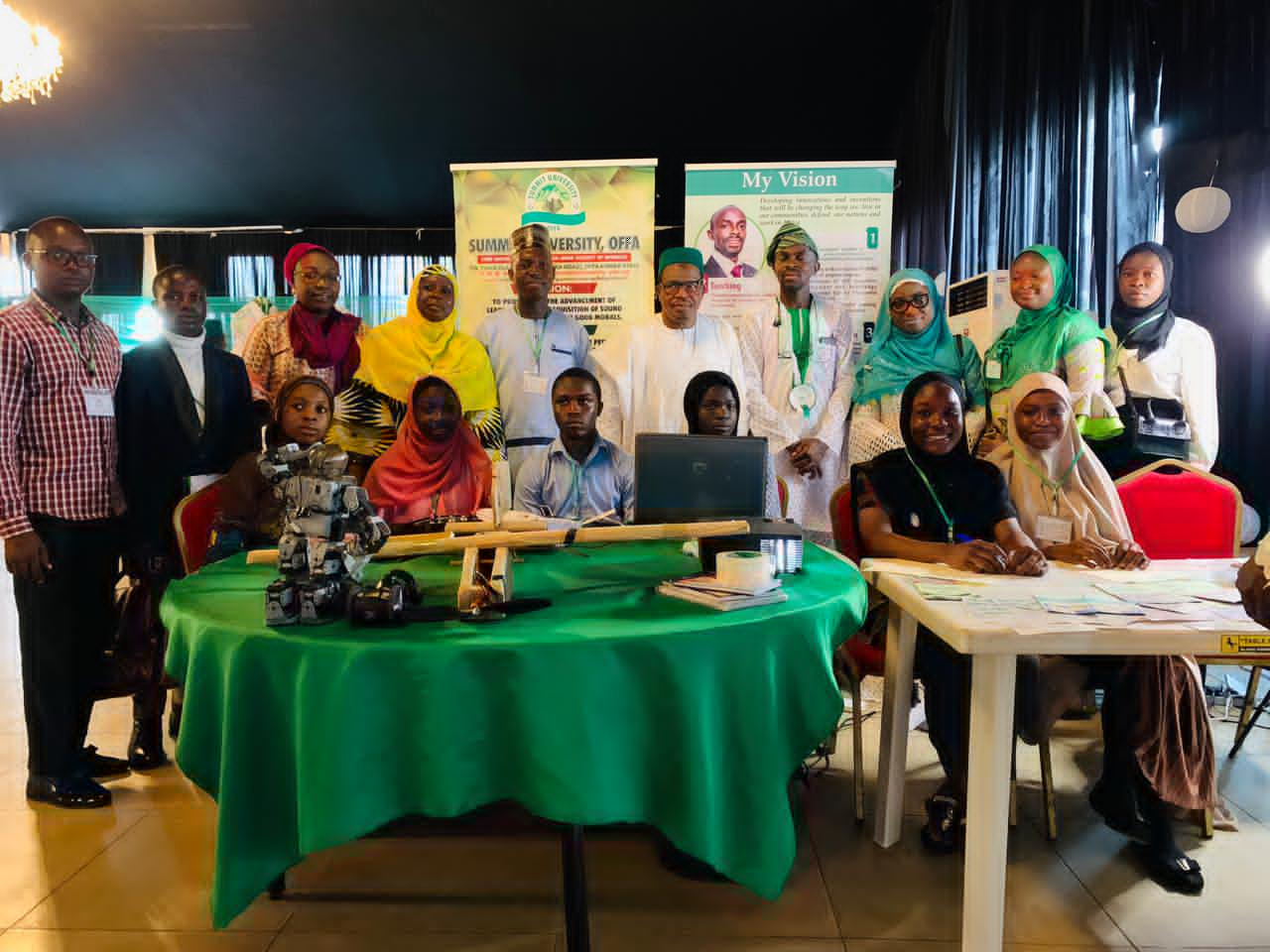
When I think about Mechatronics at FUT Minna, the PhD Clinic, AEIRG, the Research and Innovation Unit, Grantsmanship, Student-Centredness, Acadopreneurship, my responsibilities in the community and the work we are doing at Summit University, I see one lesson repeated in different ways: the work must become bigger than the person who started it.
One day, I will no longer be a Vice-Chancellor. One day, I will no longer be the person driving some of the initiatives I have helped establish. When that day comes, my greatest hope is not that people will say, “He did this.”
My hope is that they will say, “What he started continued. We took it further.”
Because perhaps the greatest responsibility of leadership is not to make sure people remember that you were there. It is to make sure that what mattered continues after you are gone.
If the people we mentor become mentors, if the institutions we help build become stronger, and if the next generation inherits something better than what we received, then perhaps we have truly left something behind.
And perhaps, in the end, that is what leadership really means: not holding tightly to what we have built, but loving the vision enough to place it in the hands of others and trusting them to carry it further than we ever could.
For me, succession has never been only about who occupies an office next. It is also about who carries the knowledge, values and courage to build what comes next.
The stories are many. The lessons are even more.
Prof. Abiodun Musa Aibinu, Ph.D.
Professor of Mechatronics Engineering | University Leader | Innovation & AI Advocate
Author, "Notes from a Vice-Chancellor"
Sharing practical insights and lessons from academia, leadership, technology, innovation, and institutional transformation.