Nigeria’s growing drone industry could offer young people new routes into employment and entrepreneurship beyond traditional university courses. But experts say parents, policymakers and industry leaders must do more to turn technical skills into jobs, businesses and home-grown innovations.
Every parent wants the best for their child. We want them to study a respected course, graduate with excellent results, secure a good job, and build a comfortable life. For many families, success still means gaining admission to Medicine, Law, Engineering, or another highly sought-after programme.
There is nothing wrong with these ambitions.
But are we preparing our children for the world they are entering, or for the world we grew up in?
What if some of tomorrow’s most exciting opportunities lie in industries many parents have barely considered? What if some of these opportunities are literally flying above our heads?
I am talking about drone technology.
This Journey Did Not Begin Yesterday
My journey with drones began in 2014, when we were already flying them in Minna, Niger State. We saw possibilities beyond aerial photography, including engineering, automation, research, and practical problem-solving.
In 2020, as Chairman of the Local Organising Committee for Nigeria’s inaugural Unmanned Aerial Vehicle (UAV) Competition, I worked with the Defence Research and Development Bureau, Nigeria, then headed by Air Vice Marshal O. J. Osahor (now retired). We advocated the use of drones in healthcare delivery, medical supply distribution, security, disaster response, and Nigeria’s digital economy. The 2020 UAV Challenge was fully sponsored by TETFund, NCC, NAF, NA, DHQ etc. Pictures and videos of the event are available on our Facebook page, https://www.facebook.com/uav.competition.ng
More than 200 people expressed interest, and over 50 were selected for the main competition at Jaji Airfield. They were assigned missions and challenged to build drones capable of accomplishing them. I am pleased that we have remained in touch with participants and continue to follow their progress.
The Nigerian Tribune, The Punch, The Sun and other newspapers reported on our ambitions for UAV technology. Read the full news on: https://punchng.com/uavll-aid-healthcare-delivery-don/
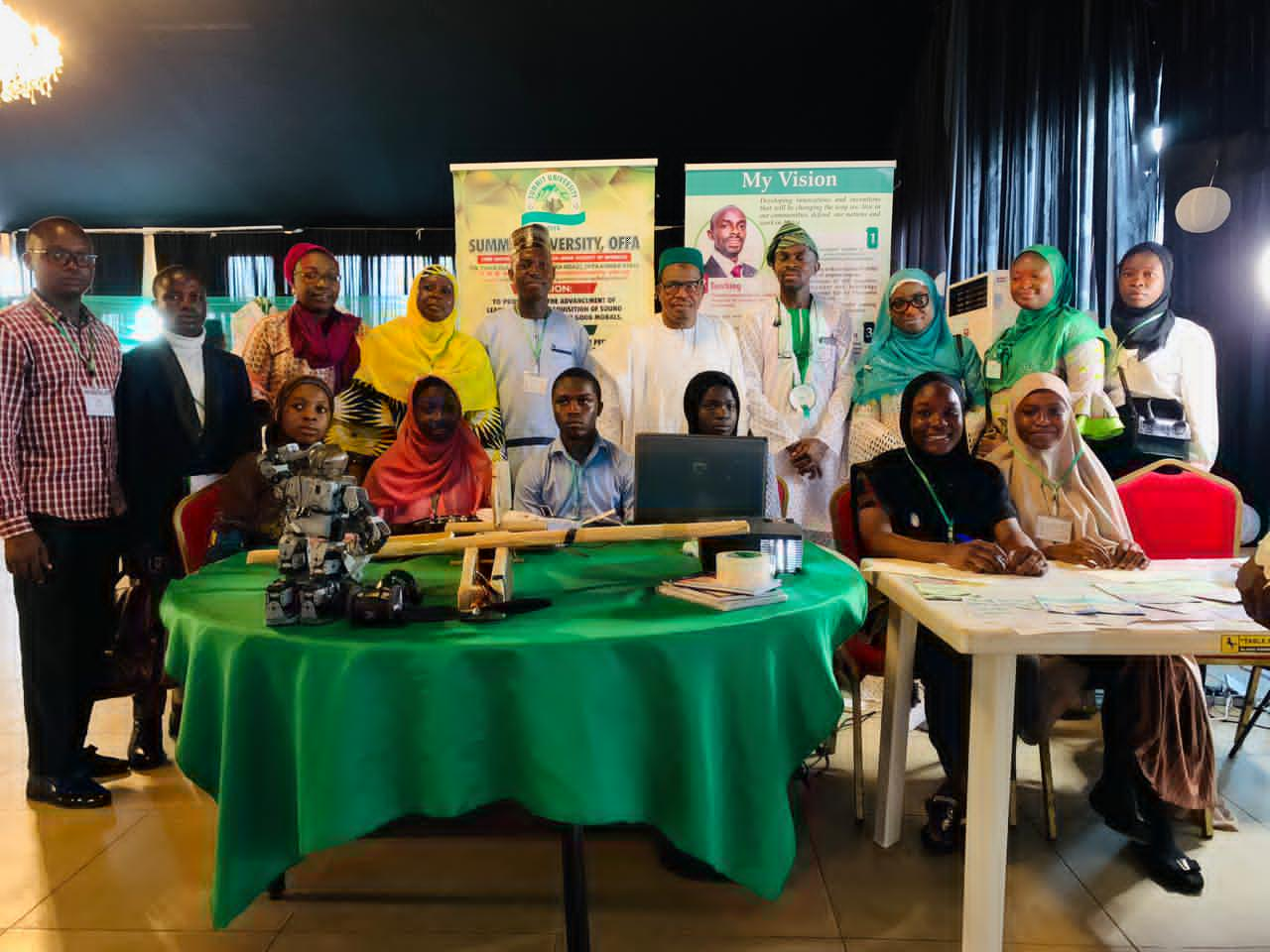
The journey continued at Summit University, Offa. In 2022, we organised two boot camps, Drone Building and Piloting I and Drone Building and Piloting II, alongside seminars on clean energy and artificial intelligence. More than 200 participants received training, and some subsequently obtained drone-piloting certification.
We went further by introducing Drone Technology as a standalone course in the curricula of the Kola Balogun College of Artificial Intelligence and Digital Engineering and the College of Innovation and Computing Technology.
Our objective was not simply to teach people how to fly drones. We wanted to equip young people with practical skills that could open doors to employment, entrepreneurship, and innovation beyond their university certificates.
Beyond the Traditional High-Flying Courses
Let me ask parents a difficult question. If your child does not gain admission to Medicine, Law, or another highly competitive course, does that mean the child’s future is less promising?
Absolutely not.
Over the years, I have encountered parents who want to dictate what their children should study at university. Sometimes, I have had to remind them, respectfully but firmly, that if they still wish to pursue the course they are imposing on their children, they are welcome to obtain the university application form themselves!
Behind the humour lies a serious concern. Are we sometimes trying to fulfil, through our children, ambitions we could not achieve ourselves?
Our children deserve guidance and support, but they also deserve the opportunity to discover their own strengths and interests. As Vice-Chancellors, we must sometimes have the courage to guide parents as well as students. Our responsibility is to nurture potential, not impose unfulfilled dreams.
Some young people will become doctors and lawyers. Others may become drone engineers, AI developers, robotics specialists, or technology entrepreneurs. Society needs all these talents.
Beyond piloting, drone technology offers opportunities in engineering, software development, manufacturing, assembly, maintenance, data analysis, and commercial services. A young person may design a drone, develop its software, maintain its systems, or establish a business using drones to serve farmers and other industries.
We should not prepare young people only to seek jobs in existing industries. We should also prepare them to participate in industries that are still emerging and to create them.
From Student Projects to Real-World Solutions
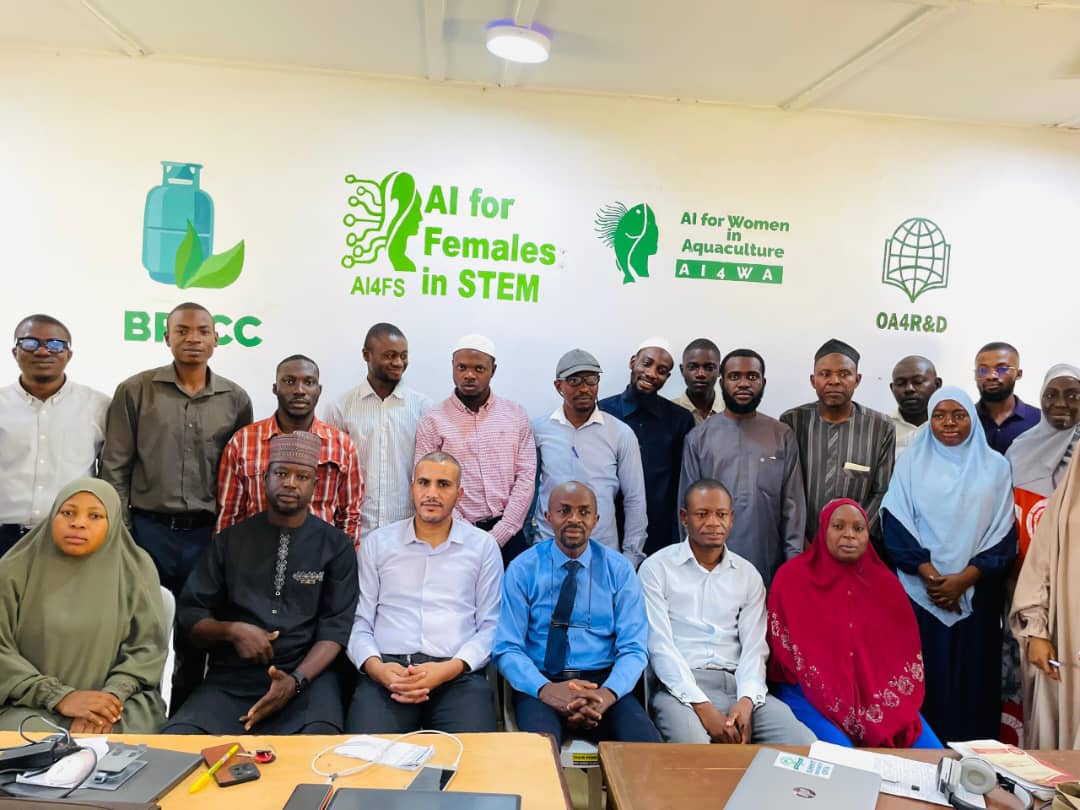
At Summit University, we commenced a poultry egg-theft detection initiative as a final-year capstone project in 2025. The work continued into 2026 and developed into a research collaboration involving Summit University, the Federal University of Technology, Minna, Tiwakiki Ltd in Manchester, Manchester Metropolitan University, the International Centre for Theoretical Physics (ICTP) in Italy, and Beyond Vision in Portugal, with support from the EU-funded REMARKABLE project.
The initiative explores how artificial intelligence and drone technology could help address egg theft in poultry farming. It demonstrates how students can apply their knowledge to real problems while exploring possibilities for research, product development, and startup creation.
The project is still developing. A promising idea does not automatically become a market-ready product; further development, validation, investment, and engagement with potential users are essential. Nevertheless, we must create an environment where promising student projects can progress beyond the classroom.
The wider industry offers reasons to take this opportunity seriously. In August 2026, Beyond Vision announced the first close of a Series A funding round exceeding €28 million to support industrial production, AI capabilities, and international expansion. Read the report on Startup.eu.
https://www.startup.eu/investments/beyond-vision-28-series-a-10-2026
African young people should have opportunities to participate in this growing industry rather than remain only consumers of technologies developed elsewhere.
In 2025, Summit University also pursued a proposal for a drone assembly plant, supported by a generous donation from Engr. (Dr.) Kola Balogun and collaboration with industry partners, including Momas. The proposed plant has yet to become operational.
This reminds us that training, prototypes, and partnerships are important, but they must be supported by sustained investment, appropriate facilities, market access, and customers willing to use the solutions being developed.
What Must Change?
Parents must broaden their understanding of success and encourage their children to explore emerging technologies alongside their academic studies. A child’s future should not be judged solely by admission into a few highly sought-after courses.
Policymakers must look beyond training numbers. What happens after the workshops? Are young people finding jobs, developing products, providing services, or establishing businesses? Skills development must connect to mentorship, funding, infrastructure, and industry opportunities.
Universities must connect teaching and research to real-world challenges. Through practical projects, laboratories, and industry partnerships, students can learn to turn knowledge into solutions.
Industry leaders must open their doors to young people, offering opportunities to gain practical experience, work with professionals, and demonstrate their capabilities. Partnerships should produce tangible outcomes, not just meetings and memoranda.
Drone operations must also be safe and comply with applicable regulations. Responsible regulation should protect the public while allowing innovation to flourish.
Youth empowerment cannot end with a training certificate. We need an ecosystem that connects skills to products, services, enterprises, and jobs.
A Journey I Intend to Continue
From flying drones in Minna in 2014, to the UAV competition in 2020, the boot camps at Summit University in 2022, and our subsequent research and industry collaborations, this has been a continuing journey.
Not every ambition has been realised. Some initiatives have achieved important milestones; others still need funding, partnerships, and further development. But I remain convinced that the opportunities are worth pursuing.
I intend to continue this work after leaving the office of Vice-Chancellor. My interest in drone technology and youth empowerment began long before my current leadership role, and I do not intend for it to end when that role ends.
To parents, I say: let us not limit our children’s aspirations to careers we already understand.
To policymakers, I say: let us build the infrastructure and investment pathways that turn skills into opportunities.
To industry leaders, I say: let us create room for young people to learn, innovate, and contribute.
And to young people, I say: do not aspire only to operate tomorrow’s technology. Aspire to design it, build it, improve it, and create businesses around it.
The next generation of opportunity may not lie only in the traditional courses we compete so fiercely to study. Some of it may be flying above our heads—and
waiting for us to recognise its potential.
Are we ready for the drone revolution?
The stories are many. The lessons are even more.
======
Prof. Abiodun Musa Aibinu, Ph.D.
Professor of Mechatronics Engineering | University Leader | Innovation & AI Advocate
Author, "Notes from a Vice-Chancellor"
Sharing practical insights and lessons from academia, leadership, technology, innovation, and institutional transformation.