Stuttering is an invisible disability, and it deserves understanding, patience, and respect. It does not deserve mockery, impatience, or name-calling. It calls instead for encouragement, empathy, and opportunity.
As I mark another year of life today, I pause to reflect, not only on the path I have walked, but on the countless voices, hands, and hearts that have lifted me along the way. Today, I want to speak especially to those who look up to me for guidance, encouragement, or simply reassurance.
I am, without doubt, a teacher. Yet, many know me for more than that. They know me as someone who has faced a silent, invisible challenge: stuttering. A disability that cannot be seen, but can be heard. A challenge that shakes confidence, invites misunderstanding, and tests patience in ways only those who live it can truly know.
I would not be standing here, sharing this, without the extraordinary people who believed in me. My childhood mentor, Prof. Ifedayo Adeola Odeniyi MBBS, and his brother, Engr Segun Odeniyi, patiently taught me the early ways to manage my speech. My teachers at Euba Boys' Secondary School, especially Mrs. Akanni, our English and Literature teacher, and Mrs. Zubair, our IRK teacher, encouraged me to face my fear, to keep speaking, to keep leading. I still remember Mrs. E. U. Ideh, the school principal, who, back in 1988, showed concern and understanding that lifted a weight off my young shoulders. A weight I did not even know I carried, yet one that threatened to crush my confidence.
Even my Arabic teachers left marks that time cannot erase. The first, and later Late Alhaji Bodunrin of Tawakalitu Mosque, Omowumi Mushin, were patient beyond measure. I remember moments when my words were blocked, when my tongue refused to flow, when my heart raced and fear whispered that I could not continue. And yet they waited, silently, expectantly, until my voice returned. May Allah accept their kindness and patience. I must also honour my ICT mentor, Alhaji Nurein Oganla, for showing me the way to manage it, for teaching me to believe in myself when doubt and fear threatened to paralyse me.
I have walked a path shared by some of the world’s most remarkable leaders. Basorun M. K. O. Abiola, one of Nigeria’s heroes, faced this invisible challenge. Globally, President Joe Biden has shown the courage to speak openly about his stuttering, inspiring millions by proving that it does not define intelligence, ability, or leadership. King George VI of the United Kingdom, whose struggle was well documented, worked tirelessly with speech therapy to address his stutter and serve his people. Historians note that as a child, King George VI, then Prince Albert, Duke of York, was pressured to use his right hand instead of his natural left hand. This, combined with other stresses, contributed to his speech difficulties and stuttering. Let us understand: forcing a child to change from left to right handedness or placing constant pressure on them can leave invisible scars, echoes that follow into adulthood and quietly shape confidence and self-belief.
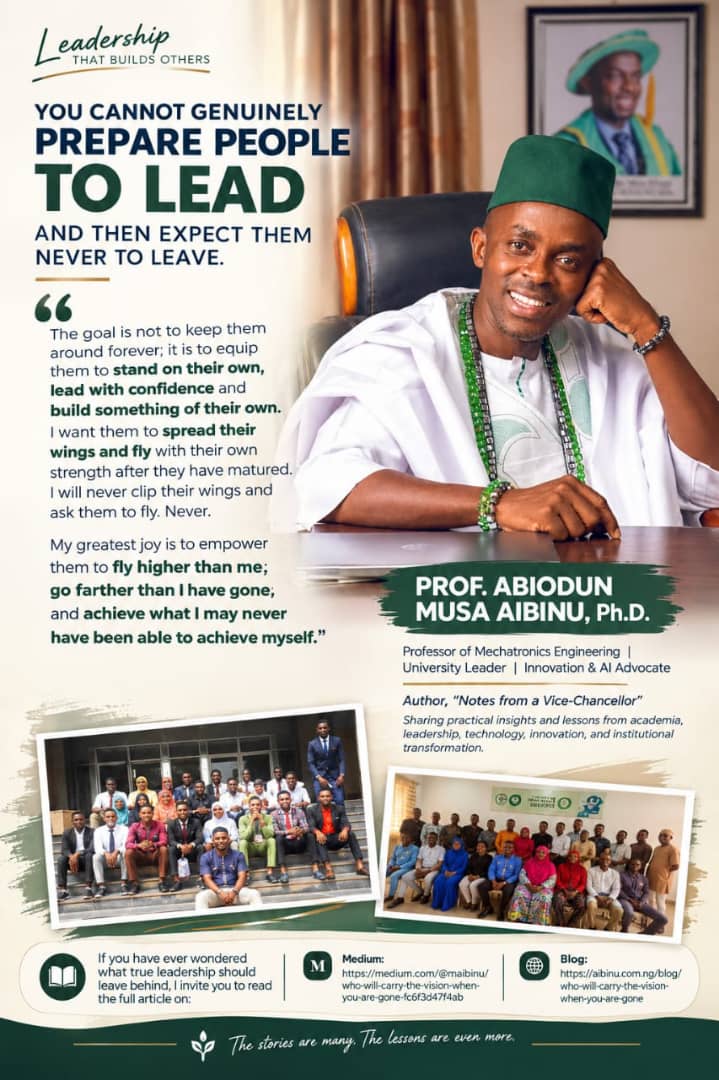
Stuttering is an invisible disability, and it deserves understanding, patience, and respect. It does not deserve mockery, impatience, or name-calling. It calls instead for encouragement, empathy, and opportunity.
Research tells us that stuttering is complex. It can arise from genetics, neurological differences, speech motor challenges, rapid developmental phases, and environmental pressures. Stress, fatigue, or negative reactions can make it more apparent, yet a supportive environment can ease its weight significantly.
I dropped out of university in 1992 because of the fear that my stuttering would prevent me from becoming a good lecturer or teacher. At one point, I was even advised not to consider the teaching profession because of this challenge. Yet, destiny has shown me that whatever Allah wills, He provides support and makes a way. In 1995, I gained admission to study Engineering, believing I could avoid a career in teaching. And yet, today, I am a Professor, a full-time lecturer, and a teacher passionately focused on STEM, especially inspiring and educating children.
I have learned to manage my stuttering with practical strategies. I mark my scripts with pauses and breathing points. I swap words I fear I cannot say with synonyms. I pace myself. Even now, under stress, fatigue, or high pressure, my stutter may return, but it no longer defines me.
To families, friends, and neighbours of those who stutter, patience is everything. Listen. Let your loved one speak at their own pace. Do not finish their sentences. Do not show frustration. Create calm spaces. Celebrate their words. Focus on meaning, not fluency. Avoid labels, jokes, or terms that stigmatise. Your patience is more powerful than you know. It can transform fear into confidence, hesitation into courage.
To those living with stuttering, seek support. Speech therapists, encouragement, and self-practice are powerful tools. Remember, stuttering is a challenge, but it is not a barrier to achievement.
To those interviewing or examining people with stuttering challenges, listen, and give us more time. Do not judge us by how many words we say like others. Extend our time. You cannot feel the pressure we endure inside, the fear that boils quietly in our hearts with every blocked word, the silent struggle that rages while we try to speak.
I take comfort in the example of Prophet Musa, peace be upon him, who faced a speech challenge of his own. In the Quran, he prayed to Allah:
"My Lord, expand for me my chest,
And ease for me my task,
And untie the knot from my tongue,
That they may understand my speech."
(Quran 20:25–28)
This divine supplication reminds us that even a prophet sought Allah’s help for clarity of speech. It teaches us that seeking help, through prayer, therapy, or support, is not weakness, but courage.
Despite my own stuttering, life has given me voice and opportunity. I have been nominated for best teacher awards and received countless accolades from speaking at various events. Your standing ovation after my speeches, your smiles, your kind words, have encouraged me to leave the baggage behind. I have served as a keynote speaker, lecturer, panelist, mentor, and coach in countless forums. On average, I speak at over twenty events every month. Each word, each pause, each moment of overcoming fear is proof that we can rise above the limitations others perceive.
To my students, supervisors, colleagues, and all who have walked this journey with me: your anecdotes, your constant feedback, your little messages telling me what you learned from my talks, these are treasures. They remind me that encouragement can lighten the heaviest burdens.
So, to everyone listening, reading, or walking this path: all is not bleak. With patience, support, and opportunity, the voice inside you will be heard, and your story will inspire others as much as it has shaped you.
======
Prof. Abiodun Musa Aibinu,
Mogaji Aikulola-Aibinuomo I,
Vice-Chancellor/Chief Executive and Academic Officer,
Summit University, Offa,
Kwara State, Nigeria.
www.aibinu.com.ng