Reflections on public speaking and leadership responsibility
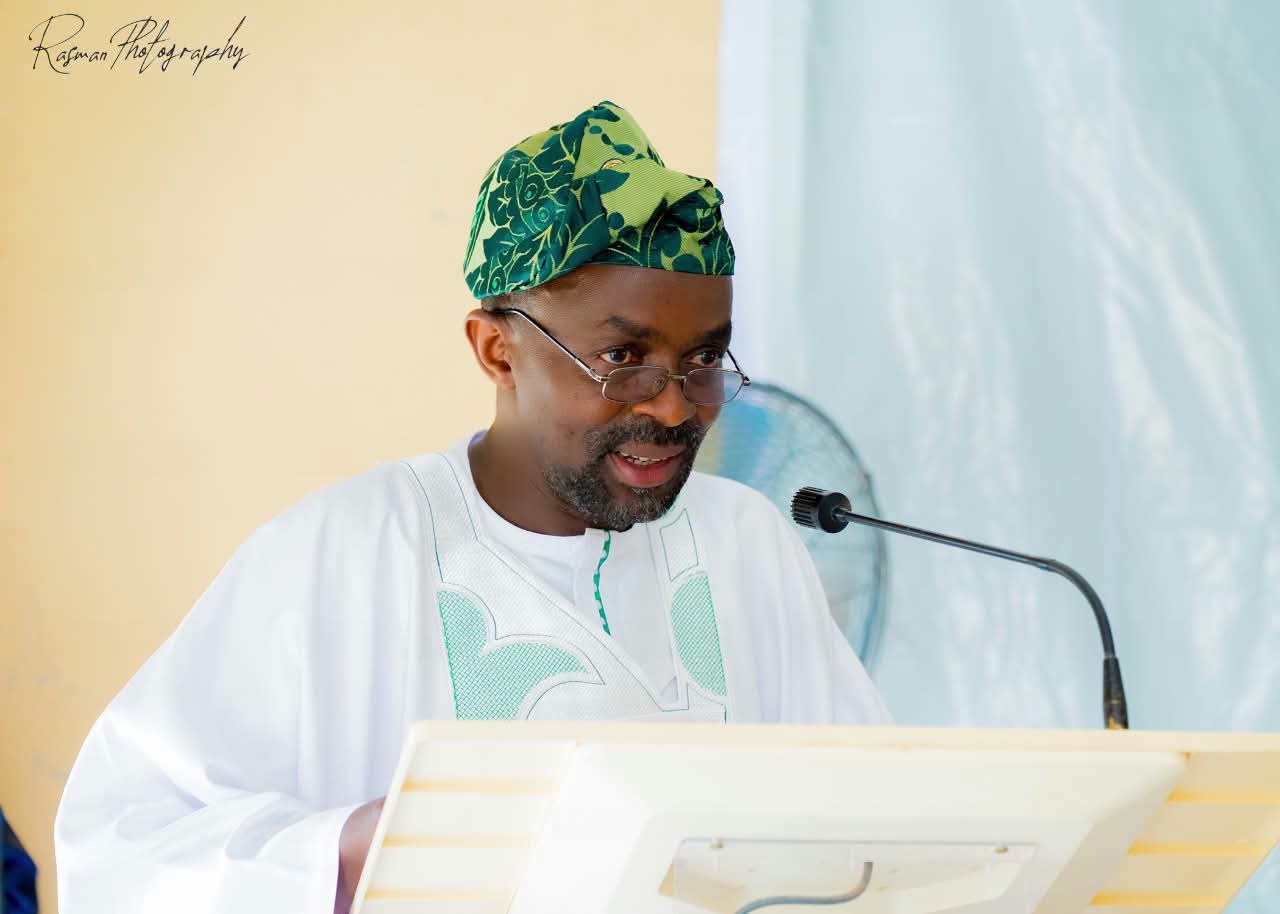
There comes a moment, usually after the applause has faded and the hall has emptied, when the weight of words finally settles. Over the last twelve months, I have stood before audiences more times than I can easily count. Universities, mosques, conference rooms, community halls, innovation spaces, classrooms. From convocation ceremonies in Wudil, Offa, and Igboora, to halls in Ibadan, policy rooms in Abuja, virtual halls stretching across continents. More than two hundred occasions to speak, to explain, to persuade, to encourage. Yet it is often in the quiet that follows each engagement that the true question emerges: "what, exactly, was I trying to say?"
I have come to realise that my speaking over this period has not been driven by a desire to be heard, but by a sense of responsibility to interpret a changing world for those navigating it in real time. The pace of transformation around us is relentless. Technology advances faster than institutions adapt, and young people are often left to reconcile old expectations with new realities on their own. Each invitation to speak, whether at a university convocation, a research workshop, or a national policy forum, felt less like an honour and more like a call to help make sense of the moment we are living through.
In many religious gatherings, I found myself returning to a familiar tension. Faith communities, by nature, are guardians of tradition, yet the world their adherents inhabit is increasingly digital, algorithmic, and automated. I recall standing before congregations during Ramadan lectures in Ibadan, Offa, and virtual spaces beyond Nigeria, speaking on themes such as technology in Dawah, Islam and science, and the ethical dimensions of emerging technologies. What I tried to articulate in those moments was not a defence of technology, but a reminder that tools do not possess intent. Values do. If faith withdraws from the digital conversation, it does not preserve purity; it simply surrenders influence.
That realisation has stayed with me, because it speaks not only to religion, but to every institution that fears relevance will dilute identity.
When I speak to students, the reflections become more personal. I see in them echoes of my own early years: ambition, uncertainty, impatience with slow systems, and an understandable hunger for immediate impact. Whether addressing undergraduates at Summit University, young innovators at national competitions, or participants in workshops on digital skills and research capacity, I often share an observation that has grown clearer over time. Intelligence is common; disciplined thinking is not. Knowledge is abundant; purposeful application is rare. I have watched capable minds stagnate, not because they lacked ability, but because no one taught them that learning is a means, not an end. Each time I urge students to ask what problem their education is preparing them to solve, I am also reminding myself of the same obligation.
Some of the most difficult conversations have emerged in policy-oriented forums, where the distance between plans and lived reality becomes impossible to ignore. In meetings with regulators, defence institutions, professional bodies, and education leaders, I have spoken about unemployment, insecurity, gender equity, data privacy, and wasted potential, not as abstract statistics but as human stories. I have met young graduates who are neither lazy nor unskilled, yet find themselves excluded from opportunity because systems were designed without them in mind. In those moments, I am conscious that speaking truth carries a burden. It requires naming uncomfortable gaps without resorting to blame. It requires insisting that education, innovation, and governance must intersect meaningfully, or else they fail the people they were created to serve.
My engagements on technology and sustainability have also reshaped how I see progress. Earlier in my career, I believed innovation was primarily about invention. Over time, through discussions on renewable energy, manufacturing productivity, food and nutrition security, and intelligent systems, I have come to see that it is just as much about attention. Attention to inefficiencies that have been normalised. Attention to systems that quietly leak value, energy, and trust. When I speak about artificial intelligence, robotics, or automation, whether to engineers, accountants, or policymakers, I am really speaking about stewardship. About our obligation to notice what we have learned to ignore.
What considered reflection has revealed to me most clearly is how consistent the underlying message has been across these diverse platforms. Whether addressing engineers or clerics, students or administrators, innovators or community leaders, the same themes surface. Technology must remain subordinate to human values. Education must remain accountable to society. Leadership must remain forward-looking, even when the present is uncomfortable. These are not conclusions I arrived at suddenly. They are convictions shaped slowly by experience, error, observation, fatigue, and reflection, often sharpened in moments when outcomes fell short of intention.
There is a temptation, after speaking so often, to mistake familiarity for certainty. I resist that impulse. Each talk has reminded me that influence is fragile and must be exercised with humility. Words can open doors, but they can also close them if delivered without care. I have learned that the most important measure of a speech is not how loudly it is applauded, but how quietly it lingers in someone’s thinking long after the hall has emptied.
As this intense season of public engagement draws into reflection, I do not see it as a peak, but as a passage. A passage between what education has been and what it must become. Between technology as spectacle and technology as service. Between leadership as position and leadership as responsibility. If there is a single lesson these many moments have taught me, it is this: the future is not built by those who speak the most, but by those who speak with purpose, listen with patience, and act with conscience.
In the end, the podium is only a temporary platform. What remains is the obligation to live out, quietly and consistently, the ideas one has spoken aloud.
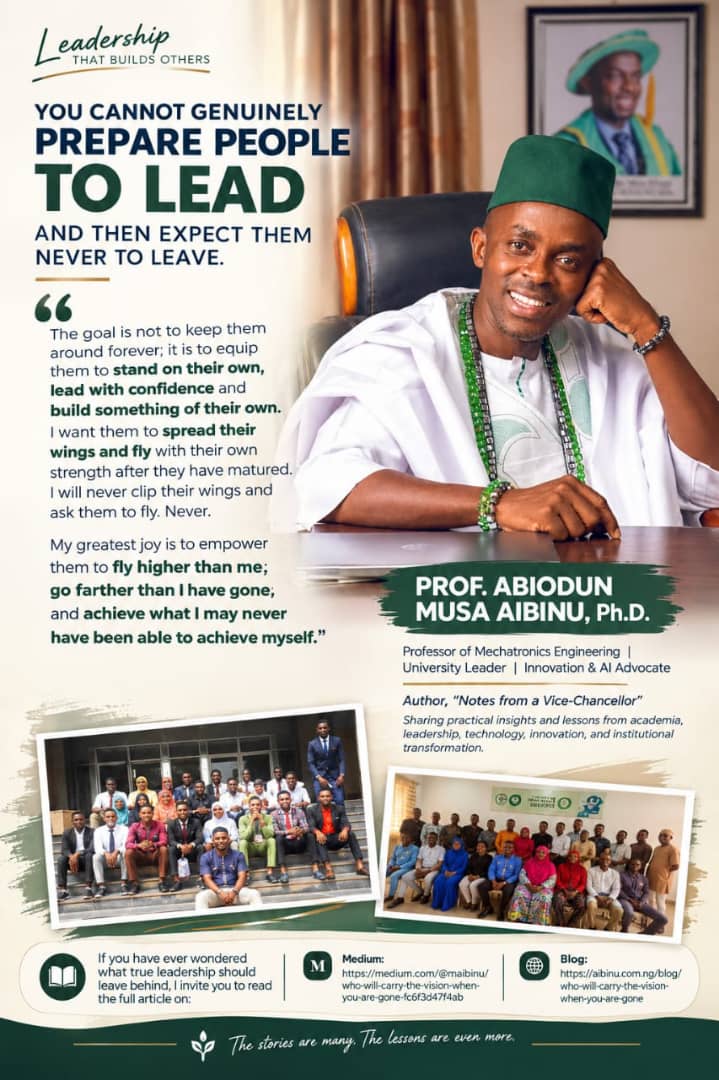
-The writer, Prof. Abiodun Musa Aibinu, is the Vice-Chancellor, Chief Executive, and Academic Officer of Summit University, Offa, Kwara State, Nigeria, and holds the Ibadan gerontocratic traditional title of Mogaji Aikulola-Aibinuomo I. Further details are available at www.aibinu.com.ng